

What Is Quality Control Inspection in Manufacturing?
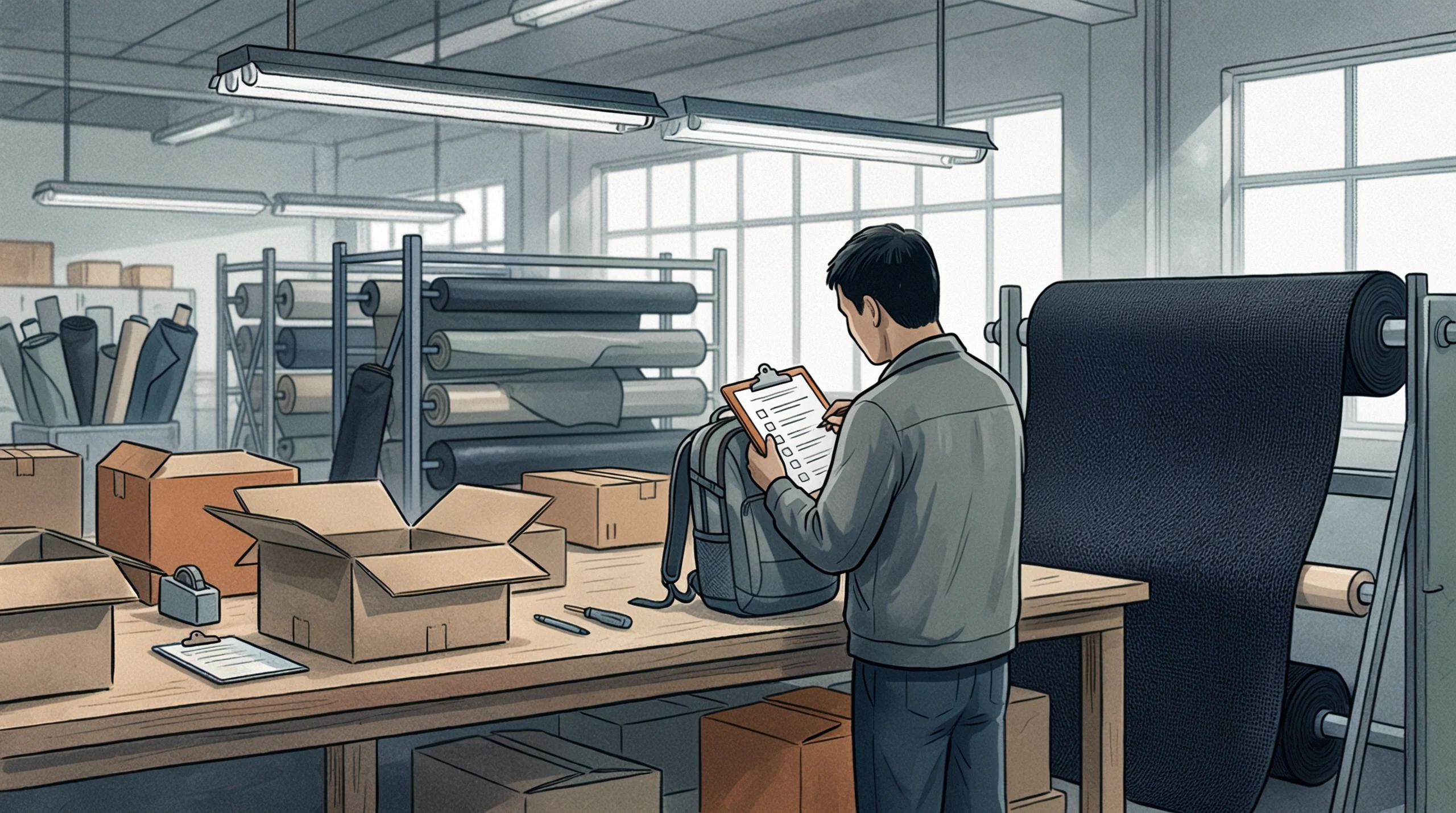
A quality control inspection is a planned check of your product against its spec, done at set points in a production run rather than only at the end. For sewn goods that means checking materials before cutting, checking construction mid-run, and checking finished units before they ship.
What an inspection actually checks
A real inspection works from the spec sheet, not a general sense of quality. Inspectors check stitch count and seam strength against the tech pack, measure finished dimensions against tolerance, confirm materials match the approved sample, and test hardware like zippers and buckles under load. Cosmetic issues get checked too: color match, symmetry, finishing on exposed edges.
None of this is subjective. A good inspection report reads like a test result, not an opinion.
The three checkpoints in a sewn-goods run
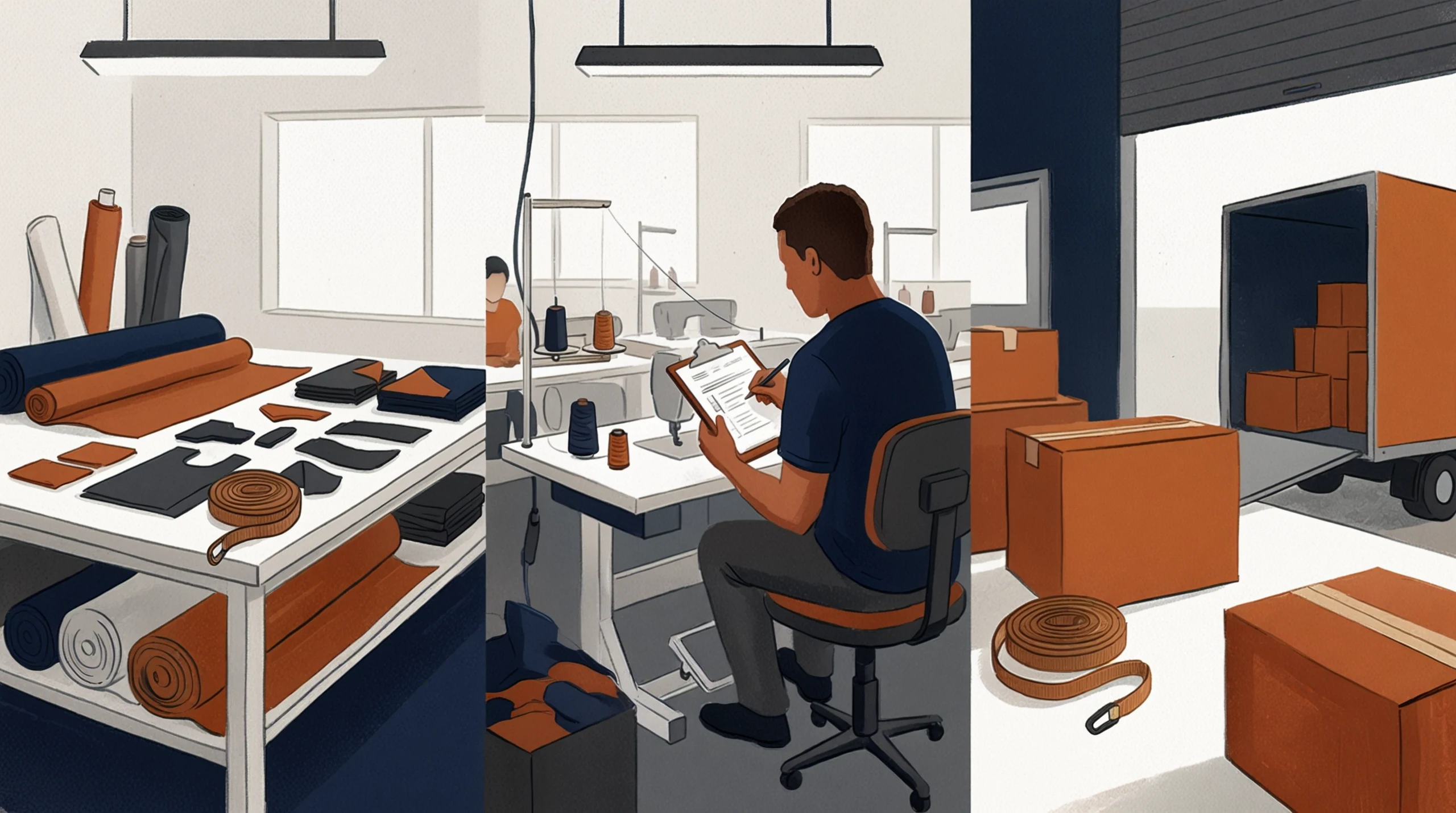
Pre-production. Before the line starts, someone checks that the fabric, hardware, and trims that arrived actually match what was approved on the sample. This is where a wrong dye lot or a swapped zipper supplier gets caught, before it is sewn into five hundred units.
During the run. Partway through production, a sample is pulled off the line and checked against spec while there is still time to stop and correct a drifting measurement or a construction shortcut.
Before shipping. A final inspection on finished, packed units, usually against a random sample of the full order, confirms what is actually going in the container.
Why who inspects matters more than the checklist
A checklist anyone can write. What it does not tell you is whether the person holding it has a reason to find problems. A factory’s own QC staff report to the factory. A sourcing agent inspecting their own placement has the same conflict with an extra markup on top. That is the actual argument for someone on the ground who works for you and has nothing to gain from passing a bad run.
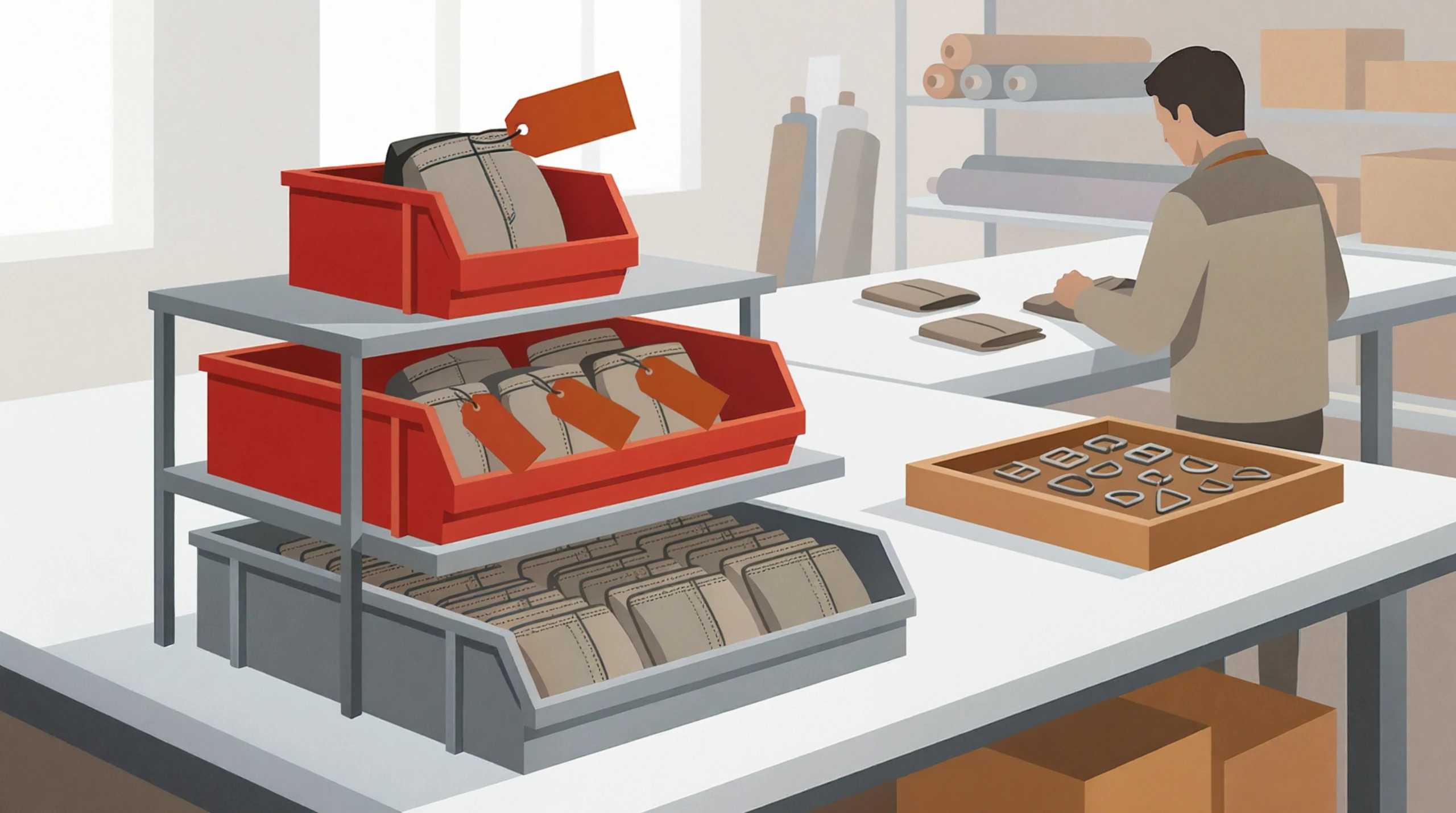
Defects get sorted by severity: critical (unsafe or unusable), major (functions but visibly wrong), minor (cosmetic only). A shipment can fail on a single critical defect even when every other unit is clean, which is the whole point of sampling instead of eyeballing a few finished units.
Red flags during an inspection
A few patterns are worth watching for regardless of who is holding the clipboard: a factory that only offers to inspect its own work, a report that is a pass/fail stamp with no measurements attached, and a factory that resists a scheduled mid-run check. Any of those should slow you down before the full order ships.
What to do this week
Ask your current factory or agent for a sample inspection report from a past order, not a sales deck, an actual report with measurements and photos. If what comes back is a one-line sign-off, that is your answer about what “quality control” means there. If you want a line-item quote with real inspection built into the process, tell me what you’re trying to make.